My Daughter's Exchange Student Cried in Our Kitchen. All I Had Was Google Translate.
Last September a sixteen-year-old girl stood in my kitchen and cried. Quiet crying, the kind you do when you're far from home and trying to hide it. Her name is Manon. She's my daughter's exchange student from Lyon, and it was her first night in America, and she was homesick and scared and standing three feet from me.
I'd been doing French apps for about three years at that point. And when a crying kid needed one kind sentence in French, the best I could manage was a cookie and my phone with Google Translate open.
My name is Lisa. I'm 45. I've told this story to enough friends now that I figured I'd write it down, because it turns out half the people I know are stuck in the same place I was.
For background: I've quit three language apps. Duolingo twice, and my best streak was 212 days. Babbel for fourteen months. Memrise for a summer. There was also a French podcast I played in the car and retained nothing from. And underneath all of it, "I took French in high school," which was 27 years ago and mostly gone.
At family dinners, "how's the French coming?" had turned into a running joke. I laughed along with everyone else. After September it didn't seem so funny.
The part I couldn't square was that I hadn't been lazy. I showed up to those apps almost every day. I matched the words, filled in the blanks, kept the streak alive on nights I could barely keep my eyes open. By every number the app showed me, I was doing great. And then a girl cried in my kitchen and I couldn't say one thing to her.
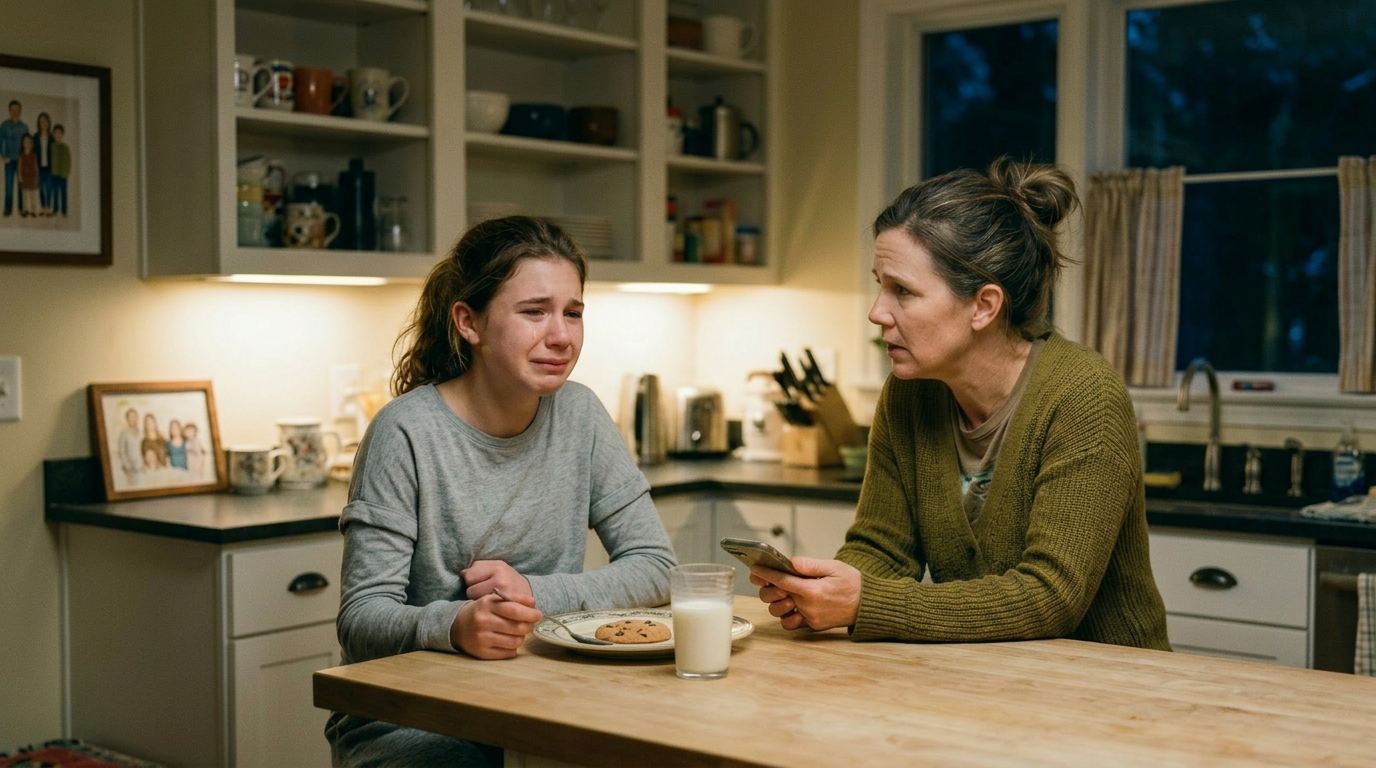
Manon's first night. Everything I wanted to say to her, and no way to say it.
The question that broke it open
A few weeks in, Manon was doing homework at our table and her English was getting better by the day. Sixteen years old, second language, improving in real time in front of me. So I asked her how she learned it.
She shrugged. "We speak it. In class, out loud, since we are small. The teacher makes us." Then she asked me something that stuck. "When you do your French app, who do you speak to?"
I didn't have an answer, because the answer was nobody. In three years I don't think I'd said a French sentence out loud to another human being, or even to a machine that could tell me if I got it right. I tapped and matched and read, and my mouth never did the thing I was supposedly training it to do.
Once I saw it, I could see why. Speaking out loud is awkward, and being corrected feels bad, and an app that makes you feel bad gets deleted, so the apps quietly let you skip that part forever. You can keep a streak going for years without ever opening your mouth. I know because I did.
What I did about it
At parent-teacher conferences in October I told my daughter's French teacher the whole story. The apps, the streak, the kitchen. I expected sympathy. She laughed and said the apps are "flash cards with confetti," and then she told me what she tells adults who ask: get an actual course, and do the speaking part out loud, every time, even when it feels ridiculous.
The one she named was Rocket French, from Rocket Languages. I looked it up that night. The company has been teaching languages for 22 years, and it's built like a course rather than a game: lessons in order, grammar explained in plain words, real recorded conversations you work through. You pay once and own it for life, so there's no monthly bill. The part that sold me was the voice tool. It has you speak out loud and compares you to native speakers, alone, in private, where nobody can hear you get it wrong.
The first lesson was free, so I tried it standing in my living room with headphones on, feeling like a fool. It rejected my first sentence four times before it passed. No app had ever made me do anything like that.
Rocket French is one of 14 languages. The first lesson is free.
Try a Free Lesson →What happened, week by week
Week one. Twenty minutes a night, out loud, in the living room after everyone went up. There's a note in my phone from that first Sunday: "Said actual French out loud today. The dog looked up. Nobody else knows."
Week three. Manon video-called her mom in Lyon every Sunday, and one night I asked if I could say hello. I had three sentences ready. Her mom's face lit up, she answered slowly, and I understood her. Manon stood behind the phone grinning like she'd taught me herself. I was prouder of those three sentences than of the whole 212-day streak.
Month two. My daughter slid her French homework across the table and said "Mom, does this look right?" I found the mistake. She checked it against the answer key, looked at me, and said "huh."
I missed days. I missed most of Thanksgiving week, and nothing happened. No subscription billed me for the silence, the course sat there and waited, and I picked it back up. I think that's part of why the apps never lasted for me. There was always something to cancel, and canceling feels like an ending. When you own the thing there's nothing to quit, so you just come back to it.
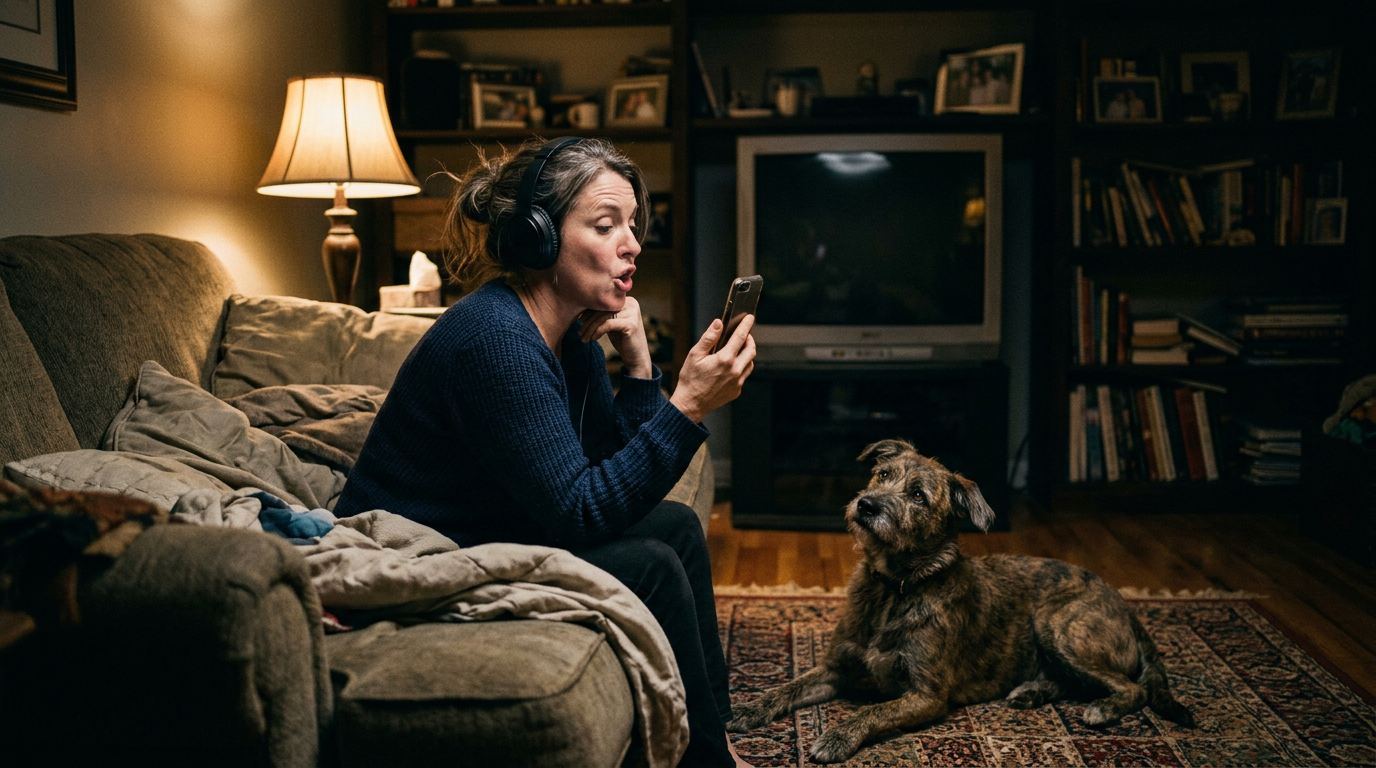
The living room, week one. The dog was the only witness.
Christmas, same kitchen
Manon flew back for Christmas break to visit. I picked her up at the airport, and in the car I greeted her in French, and asked her about the flight in French, and she squealed and answered and we kept going.
On her second night we cooked together, in the same kitchen where she'd cried in September. She talked about her friends and corrected my past tense and stole tastes from the pan, and at some point I realized an hour had gone by and we hadn't spoken any English.
I'm not fluent. I miss words, I ask her to slow down, my accent makes her smile. None of that stopped a single conversation. You don't need perfect French to be someone a homesick kid can talk to. You need enough to keep a conversation going, and that turned out to be a lot less than I'd assumed.
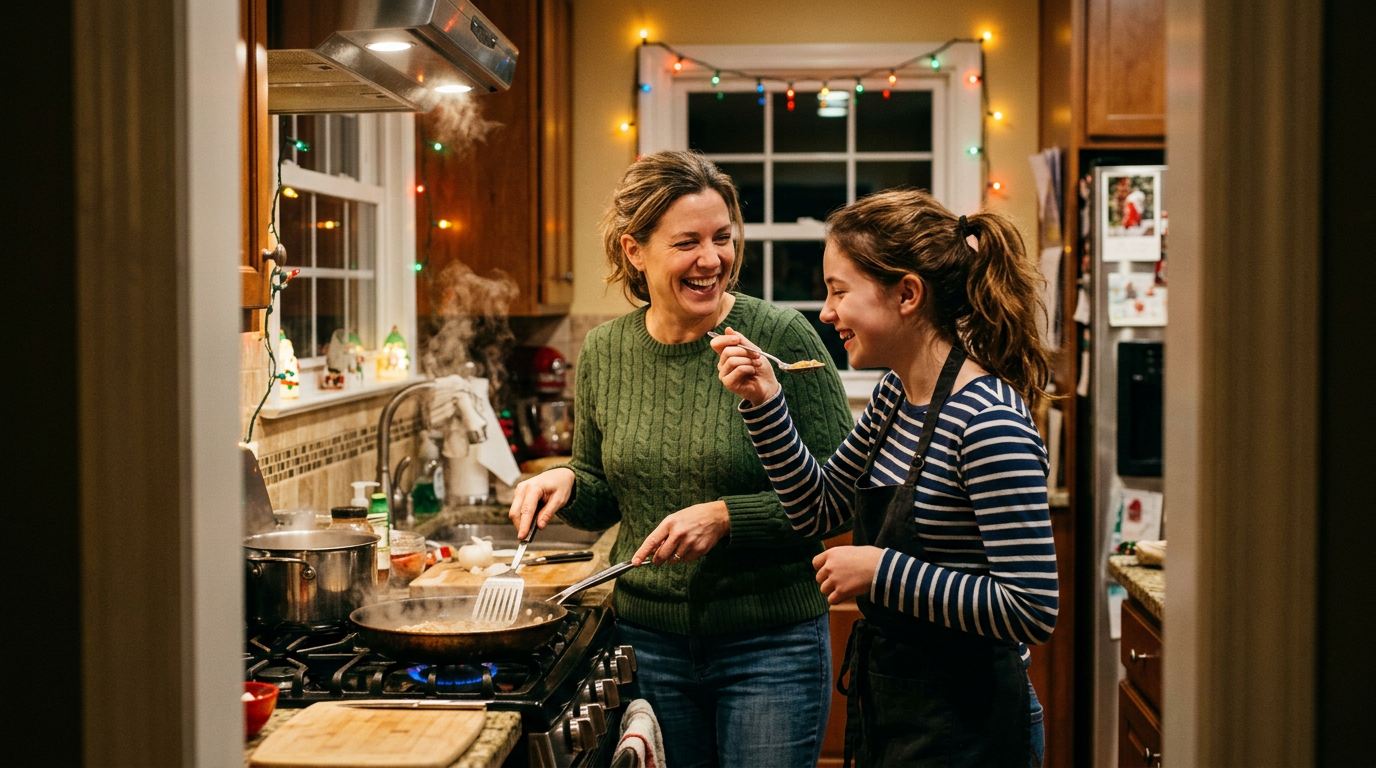
December. One hour in French, and neither of us noticed.
One more thing changed. Nobody asks "how's the French coming?" with a grin anymore, because at Christmas dinner they heard the answer. My daughter practices with me in the car now, and she's better than me, and I don't mind. I'd take being bad at French out loud over being great at an app in silence, and I wish someone had put it to me that way three years ago.
I'm not the only one who noticed the difference between a course and a game. This is from a verified Rocket French review:
"The audio lessons have both a native speaker and a non-native but fluent speaker... I really enjoy that it encourages speaking the language as well as writing, and the formatting of the lessons is closer to a classroom than something more gameified like Duolingo." Michael Reid, Rocket French learner · verified review
Join 2,000,000+ members. Pick one of 14 languages and hear yourself speak it tonight.
Start Your Free Lesson →Who this is not for
If a five-minute daily game is all you want, keep the free apps. They're fun, and fun counts for something. And no course speaks for you. I stood in my living room feeling silly, most nights, for months. What you get is the structure and somewhere private to sound bad until you don't, and the twenty minutes a night still have to come from you. The 60-day money-back guarantee means you can find out whether you'll do them without losing anything.
But if you have your own version of my kitchen, a person you couldn't speak to, a streak you're prouder of than your actual skill, a joke at the dinner table that's stopped being funny, then you already know the apps aren't getting you there. I spent three years finding that out.